
History – The Beginnings
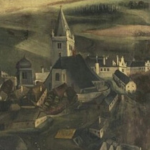
This entire masterpiece was created at the beginning of the 18th century during the High Baroque period. However, this was not the original form of the church.
Prior to the Baroque reconstruction, a small Renaissance church stood here, which burned down to its foundations in 1631. The heat of the fire was so intense that it even melted the bells in the tower.
At that time, the people of Jaroměřice rebuilt the church themselves within 50 years.
The Questenbergs
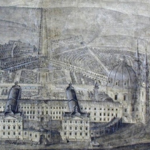
In 1700, Johann Adam von Questenberg took over the Jaroměřice estate and initiated the reconstruction of the church with the vision of creating the most beautiful Baroque church in the area – a place where one could find peace and feel welcomed.
The Count found inspiration during his travels across Europe, during which he fell in love with France and Versailles.
Completion of the Building
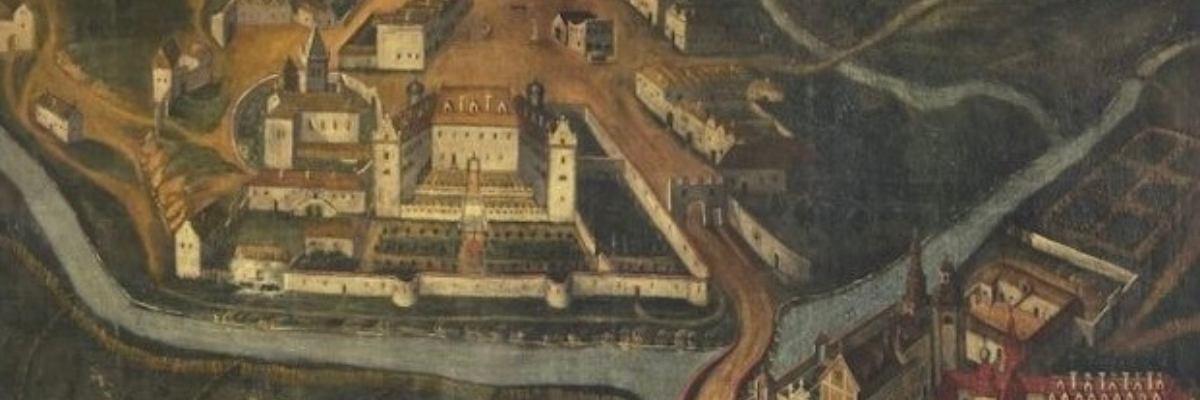
However, the construction of the church was fundamentally affected by a lack of funds. Consequently, during the building process, the Count was forced to scale back his expectations and choose less expensive options.
The church was consecrated in 1739 with the southern tower still unfinished.
The final completion of the building did not take place until 1782, when the church was finished in the simplest way possible.
Ceiling Frescoes
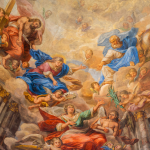
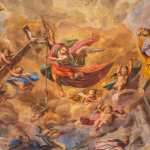
The most precious and beautiful part of the church is the ceiling fresco, covering an area of 450 m².
The author of our fresco is Karel František Antonín Tepper, who worked according to the design of the Viennese artist Konrád Adolf von Albrecht.
Symbolism of the Fresco
The fresco is elliptical in shape and gradually rises in a dramatic progression.
The first tier depicts the four Evangelists and the four Church Fathers.
The next tier of the fresco is formed by the tambour (drum). Allegorical figures between the windows represent the eight Beatitudes.
The Pinnacle of the Fresco
The third tier of the fresco features an illusionistic painting of columns forming niches that house figures of Virtues.
The fresco portrays two main scenes – the Archangel Michael fighting the dragon and the apotheosis of Saint Margaret.
Along the sides, the heaven of holy martyrs unfolds.
The pinnacle of the fresco is the Eye of Providence (Eye of God) in the lantern at a height of 44 meters.
The Eye of Providence is the work of Master Jan Knor.
The Altars
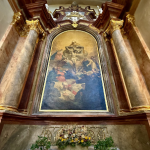
On the ground floor of the main nave, there are seven altars – one main altar and six side altars.
Two of the side altars are larger – the Altar of the Immaculate Conception of the Virgin Mary and the Altar of the Holy Trinity.
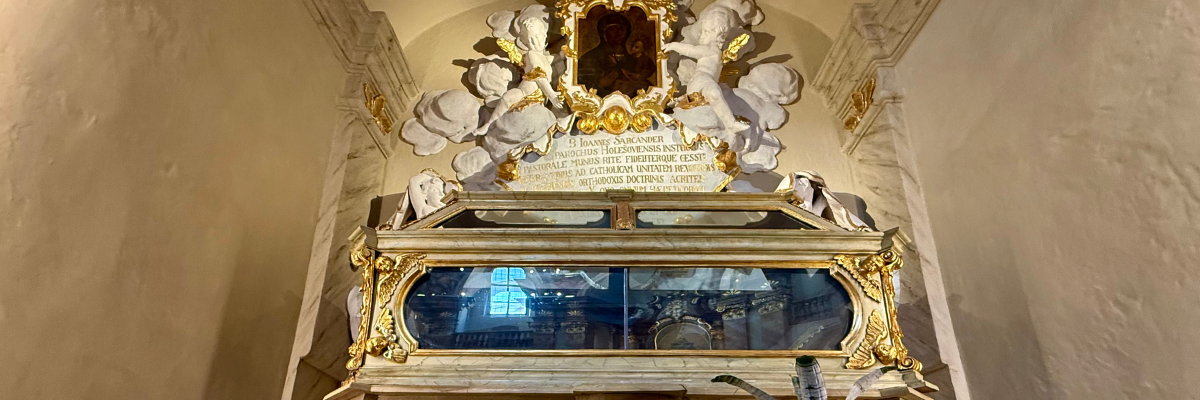
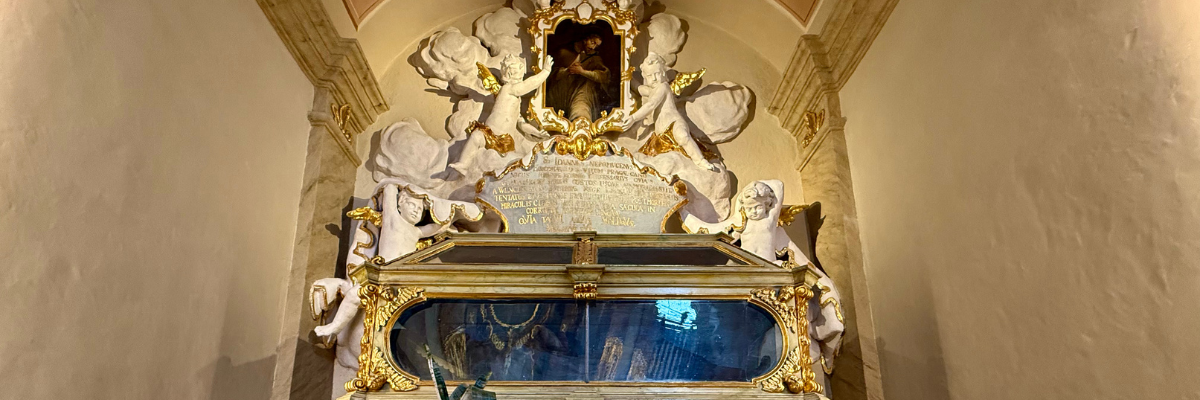
The two smaller altars contain reliquaries.
Relics
The rear altars contain the remains of St. John of Nepomuk and St. John Sarkander.
The front altars house the remains of St. Vincent and St. Reparata.
The Main Altar
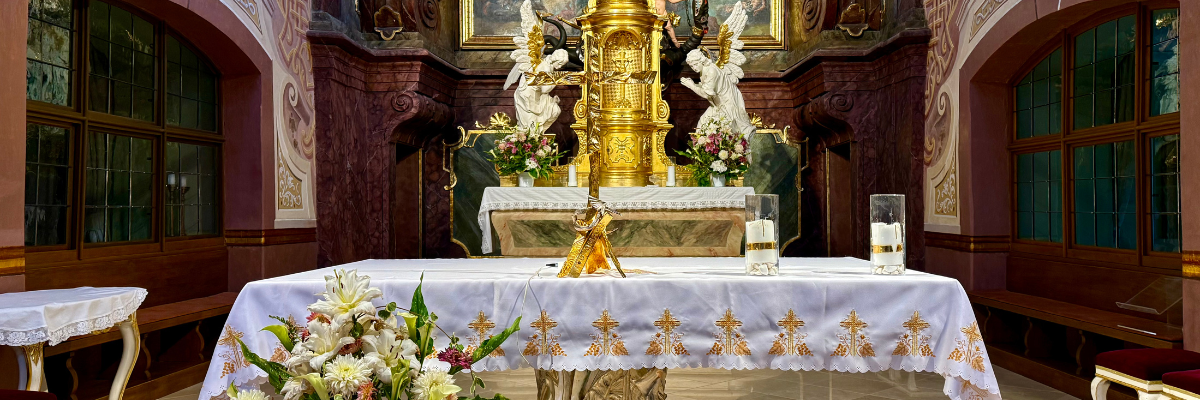
The main altar and the sacrificial altar table, which was placed in the church during the last restoration, are located at the front of the church.
The sacrificial altar table is the work of the academic sculptor Otmar Oliva.